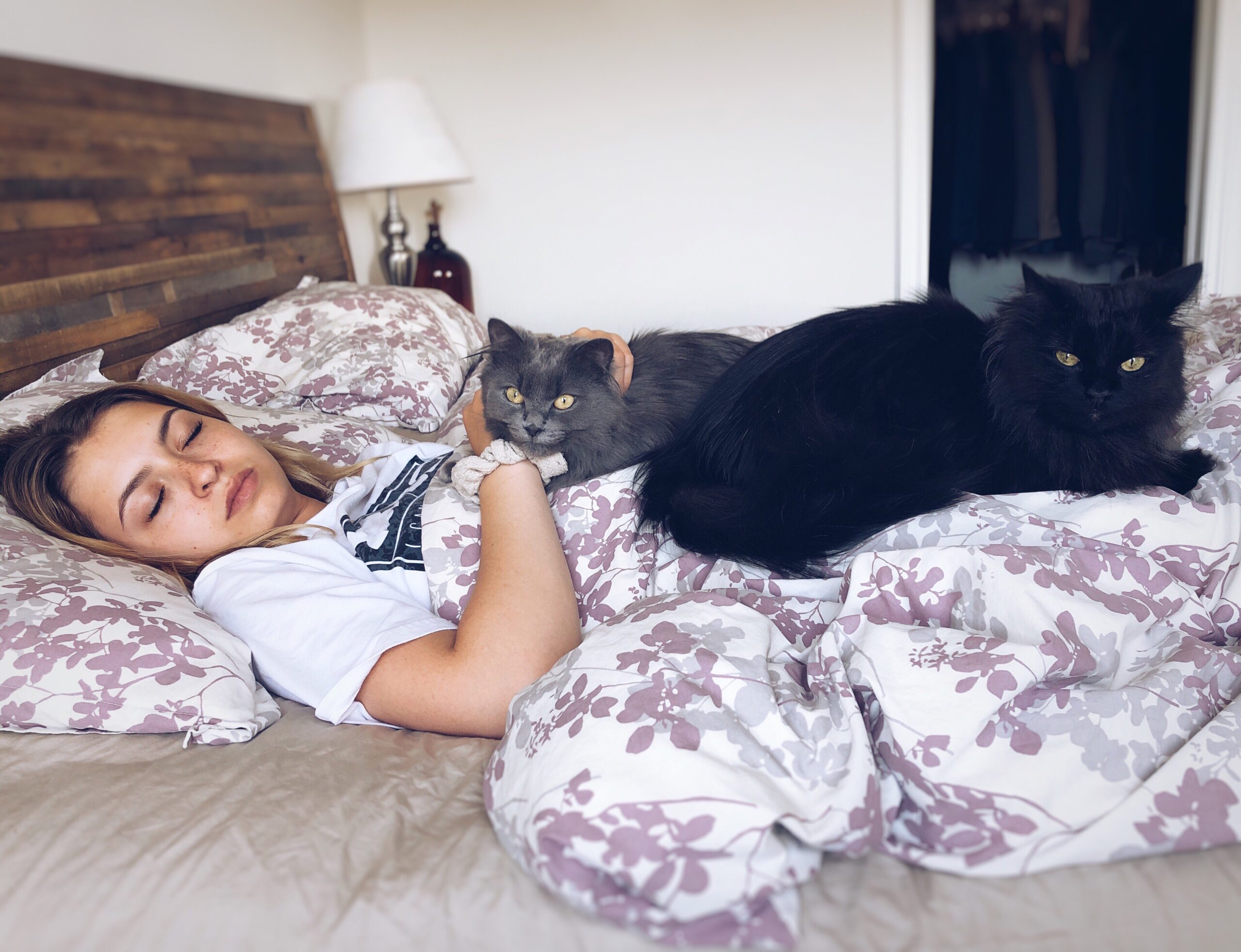
Many cat owners secretly hope their cat will choose to sleep in their bed. Not because they want to force affection—but because a cat sleeping near you is a powerful sign of trust, comfort, and emotional bonding.
However, cats don’t choose sleeping spots randomly. Their decisions are based on safety, scent, warmth, routine, and personal boundaries. If your cat doesn’t sleep in your bed yet, it doesn’t mean it doesn’t love you—it simply means the conditions aren’t ideal from your cat’s perspective.
In this guide, you’ll learn how to gently and respectfully encourage your cat to sleep in your bed—without forcing, bribing, or stressing your cat.

- 2-IN-1 FOLDABLE DESIGN: This cat bed features a versatile 2-in-1 cat cave design, offering both an open resting area and…
- REMOVABLE AND WASHABLE SOFT CUSHION: Equipped with a removable and washable soft cushion, this cat bed ensures easy clea…
- INDOOR CAT HOUSE: Specifically designed as a cat house for indoor cats, this cozy cat cave offers a secure, warm, and pr…
Why Cats Choose Where They Sleep
Cats sleep where they feel:
- Safe
- Warm
- Calm
- Emotionally comfortable
In the wild, sleep is a vulnerable state. Domestic cats still carry this instinct. When a cat chooses to sleep near you, it means it trusts you to protect it—whether consciously or not.
So the goal isn’t to make your cat sleep in your bed.
The goal is to make your bed feel like the best and safest option.
Understand: Not All Cats Want the Same Thing
Before trying anything, it’s important to respect personality differences.
Some cats:
- Love close physical contact
- Prefer sleeping nearby, not on top of you
- Value independence, especially at night
A cat choosing to sleep near your bed—or at the foot of it—can be just as meaningful as sleeping beside your pillow.
Make Your Bed Feel Safe and Predictable
Cats dislike sudden movement and chaos during sleep.
To improve comfort:
- Avoid sudden movements at bedtime
- Keep lighting soft
- Reduce loud sounds
- Maintain a consistent sleep schedule
Predictability builds trust.
Use Your Scent (Yes, This Matters)
Cats rely heavily on scent for emotional security.
Your bed already carries your scent—but you can reinforce it:
- Avoid heavily scented detergents
- Don’t use strong perfumes before bed
- Place a blanket or shirt you’ve used on the bed
Your natural scent tells your cat: this space is familiar and safe.
Create a Cat-Friendly Spot on the Bed
Cats like defined spaces.
Try:
- A folded blanket at the foot of the bed
- A soft throw near your legs
- A small cat bed placed temporarily on the bed
This gives your cat a sense of ownership and boundaries.

- Sturdy, Eco-conscious & Cat-friendly: The Peekaboo Cat Cave is made with durable, non-toxic, and odor-resistant material…
- Versatile & Roomy: The Peekaboo Cat Cave is perfect for larger cats up to 30lbs/29kg, including popular breeds like Main…
- Interactive play: Enhance the bond between pets and owners with the small peephole window in the donut bed up top and tu…
Warmth Is a Huge Motivator
Cats love warmth more than comfort.
Ways to make your bed warmer:
- Use thick blankets
- Let your bed warm up before inviting your cat
- Keep the room comfortably warm
Many cats sleep closer during colder seasons for this reason.
Encourage Calm Interaction Before Bedtime
A calm pre-bed routine helps your cat associate bedtime with relaxation.
Helpful habits:
- Gentle petting (stop at first warning signs)
- Calm talking
- Short, relaxing play session earlier in the evening
Avoid overstimulation right before sleep.
Timing Matters More Than You Think
Cats are naturally most active at dawn and dusk.
To improve nighttime sleeping:
- Play with your cat in the evening
- Feed after playtime
- Allow calm time afterward
This mirrors natural hunt–eat–rest cycles.
Never Force or Carry Your Cat to the Bed
This is one of the fastest ways to break trust.
Avoid:
- Picking up a resisting cat
- Holding your cat in place
- Blocking escape routes
Cats must always feel they can leave freely.
Let Your Cat Choose the First Move
One of the most effective techniques is… patience.
Try:
- Sitting calmly on the bed
- Ignoring your cat initially
- Letting curiosity do the work
Cats are more likely to approach when they don’t feel watched or pressured.
Why Some Cats Only Sleep on the Bed Occasionally
This is normal.
Cats may avoid the bed if:
- You move too much
- You snore or talk in your sleep
- Other pets disturb them
Your cat choosing your bed sometimes is still a sign of trust.
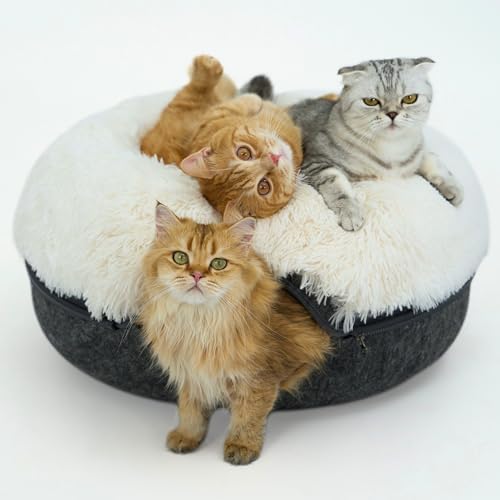
- Fluffy, Cozy & Practical Design: Cattasaurus premium cat bed cave is crafted with a double-sided plush cover for superio…
- Mess-Free & Easy Maintenance: Designed for modern pet parents, Cattasaurus cat bed features a spill-proof, waterproof li…
- Spacious & Versatile for All Pets: Perfect for large cats up to 30 lbs, including breeds like Maine Coons and Ragdolls, …
What Sleeping Position Says About Trust
If your cat:
- Sleeps near your feet → comfort + independence
- Sleeps beside you → trust + closeness
- Sleeps on your chest or neck → deep attachment
All are valid expressions of bonding.
Signs Your Cat Is Considering Sleeping in Your Bed
Watch for:
- Sitting on the bed during the day
- Kneading blankets
- Lying down briefly, then leaving
- Returning multiple times
These are test behaviors.
Common Mistakes That Push Cats Away
Avoid:
- Loud reactions when your cat joins you
- Moving the cat once it settles
- Pulling blankets suddenly
- Touching sensitive areas while sleeping
Let your cat set the rules.
Is It Okay If My Cat Never Sleeps in My Bed?
Yes—absolutely.
A cat can love and trust you deeply without sharing your bed. Some cats prefer:
- Quiet corners
- Elevated spaces
- Cooler sleeping areas
Bonding shows up in many forms.
Final Thoughts
Encouraging your cat to sleep in your bed is not about training—it’s about trust. When your bed becomes a place of safety, warmth, and calm, your cat may naturally choose to share it with you.
The key is patience, respect, and understanding your cat’s comfort level.
And if one night your cat curls up beside you, purring softly as you fall asleep—
know this:
Your cat didn’t just choose your bed.
It chose you.
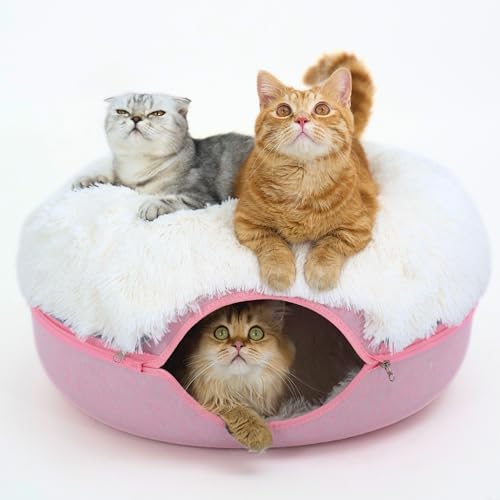
- Fluffy, Cozy & Practical Design: Cattasaurus premium cat bed cave is crafted with a double-sided plush cover for superio…
- Mess-Free & Easy Maintenance: Designed for modern pet parents, Cattasaurus cat bed features a spill-proof, waterproof li…
- Spacious & Versatile for All Pets: Perfect for large cats up to 30 lbs, including breeds like Maine Coons and Ragdolls, …